

Daniel Ruiz-Molina is a Full Professor of Materials Sciences and Nanotechnology of the Spanish National Research Council (CSIC) and Editor of the journal Biomimetics. He earned his PhD at the Institut de Ciència de Materials de Barcelona (ICMAB-CSIC) and afterwards took a 3-year postdoctoral position at the University of California San Diego (USA), mostly focused on smart molecular materials. Since 2006, he has held a permanent position as a CSIC researcher and leader of the Nanostructured Functional Materials Group (NanosFun) at the ICN2. His main research areas include the fabrication, characterization, and application of functional nanostructures for environmental and medical applications. He has published over 200 peer-reviewed scientific articles in leading environmental and chemical engineering research journals, book chapters, and conferences and he has authored numerous professional reports. He has also been very active in industrial collaborations and applied research, setting up four startups in areas related to the environment and health.

Prof. Romana Lopes Almeida dos Santos is an Associate Professor at the Faculty of Sciences of the University of Lisbon and Head of the Bioadhesion & Biomimicry Research Group at MARE. With a PhD in Biological Sciences (University of Mons, 2005), she has over 20 years of experience in marine bioadhesion, marine biotechnology, and biomimicry. Her research focuses on nature-inspired, biocompatible wet adhesives for biomedical and biotechnological applications, reinforcing the scientific and economic impact of biomimetic innovation.
She has held FCT Ciência 2008 and FCT IF 2015 research positions, coordinated national and international R&D projects, and contributed to a funding portfolio exceeding €12M. An active educator since 2009, she has supervised PhD, MSc, and undergraduate students and participates regularly in science outreach and teacher training.
Prof. Santos served as Vice-President of two COST Actions within the European Network of Bioadhesion Experts, received the Adhesion Innovation Award (EURADH/FEICA), and is Innovation Executive of the Horizon Europe TWIN2PIPSA project. She has authored numerous publications (H-index 21–22), is co-inventor of an international patent, and co-founded Biomimetx S.A., a Portuguese startup developing nature-based solutions.

Karsten Haupt studied Biochemistry at the University of Leipzig, Germany, where he received an MSc Degree in 1991. In 1994 he obtained his PhD in Bioengineering from Compiègne University of Technology, France. He then spent three years as a research fellow at Lund University, Sweden, where he worked on molecular imprinting with Klaus Mosbach. Back in France he has been a researcher at INSERM, Paris, before joining the University of Paris 12 as an associate professor in 1999. In 2003 he was appointed full professor of Nanobiotechnology at Compiègne University of Technology (UTC), France, where he is the Head of the Institute for Enzyme and Cell Engineering. He is also one of the founders and scientific advisor of the French company PolyIntell that commercializes molecularly imprinted polymer-based products for biomedical, food and environmental analysis. His present research interests include affinity technology, chemical and biosensors, molecularly imprinted polymers and synthetic receptors, biomimetic polymers and nanostructured materials for biomedical applications, including drug delivery, medical treatment and diagnostics.

Maria Laura Di Lorenzo is Research Director at Italian National Research Council (CNR), Institute of Polymers, Composites and Biomaterials (IPCB). She is the author of three books published by Springer, three patents, and more than 150 articles published in JCR journals that have received nearly 8,000 citations (Scopus). Dr. Di Lorenzo's main research interests focus on polymer crystallization and melting, bio-based and biodegradable polymers, crystallization kinetics, glass transition, polymer blends and composites. Since 2017 (first edition), Maria Laura Di Lorenzo is in World's Top 2% Scientists, the ranking developed by Stanford University and published in the Elsevier Data Repository (August 2025), DOI: 10.17632/btchxktzyw.8.
She is currently Coordinator of EIC-PATHFINDER "BORN" project (Biobased thermal-resistaNt food packaging), Coordinator of PRIN 2022 PNRR "DesiRe" project (Design for Recyclability: mono-material multi-graded semi-crystalline polymer foams), and head of CNR unit of PRIN 2022 "0DeF3" project (Zero-defect Fused Filament Fabrication).
Dr. Di Lorenzo is Senior Editor of Thermal Advances (Elsevier) and member of the Editorial Board of: Thermochimica Acta (Elsevier), Thermo (MDPI), Reviews on Advanced Materials Science (De Gruyter), Polymers (MDPI), International Journal of Polymer Science (Wiley), Advances in Materials Science and Engineering (Wiley).
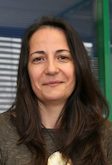
Filomena Freitas is an Assistant Professor at the Chemistry Department of NOVA School of Sciences and Technology, NOVA University Lisbon (FCT NOVA), Portugal, and a Senior Researcher at the Biochemical Engineering Group (BIOENG), at UCIBIO, FCT NOVA. She has completed a PhD in Biological Engineering by FCT NOVA in 2004. She has developed research on the development of upstream and downstream processes for the production of value-added microbial products, including polysaccharides and polyhydroxyalkanoates, as well as intellectual property development and technology transfer. Special focus is also given on the biological valorization of agro-industrial wastes/byproducts, aiming at implementing sustainable bioprocesses. She has over 110 papers published in international peer review journals, book chapters and International Patents, which have recently been granted in several countries.

Dr. Coltelli is an associate professor at the University of Pisa, Department of Civil and Industrial Engineering and holds a degree in chemistry and PhD in chemical science from the University of Pisa. She has 20 years of experience in materials science and technology, in particular polymers, biopolymers, blends, and composites, especially related to their interaction with the environment. She is the author and co-author of more than 70 publications in international journals, a book related to the reuse of polymers, and three patents related to added-value polymeric blends obtained from recycled materials.

Cyrille Boyer is an Australian Laureate Fellow and Professor within the School of Chemical Engineering, deputy-Head of School, postgraduate course coordinator, and co-Director of Australian Centre for Nanomedicine at the University of New South Wales. He is an associate Editor of European Polymer Journal and a member of Advisory Board of Advanced Materials, ACS Infectious Diseases, ACS MacroLetters, Polymer Chemistry, Journal of Polymer Science, Macromolecular Rapid Communications, Macromolecular Chemistry and Physics, Cell Reports Physical Science, Giant, etc.
His research has been recognized by several fellowships, including Australian Postdoctoral Fellowship (ARC-APD), ARC Future Fellowship, and more recently, ARC Australian Laureate Fellowship (starting in 2023). He has received several prestigious research awards, including 2018 IUPAC-Polymer International Young Researcher award, 2018 Polymer Chemistry Lectureship, 2018 Award of Excellence in Chemical Engineering, 2016 ACS Biomacromolecules/Macromolecules Young Researcher Award, 2016 Journal of Polymer Science Innovation award, Le Fevre Memorial Prize awarded by Australian Academy of Science for chemistry, and 2015 Malcolm McIntosh Prize for Physical Science (one of the Prime Minister Prizes for Science). Since 2018, he has been listed as a Highly Cited Researcher in Chemistry or Cross-field by Clarivate and named as one of the Leaders in Polymers and Plastics in Australia by the Australian Newspaper.
Cyrille’s research interests mainly cover the preparation of functional macromolecules using photocatalysts, which find applications in various areas, including nanomedicine, advanced materials, and energy storage. In nanomedicine, his group designs new antimicrobial and anticancer polymers. More recently, he has implemented his photochemistry to 3D printing for the fabrication of 3D printed objects, enabling precise control over the nano- and macro-structure of 3D printed objects. He has coauthored over 440 articles.

Thomas J. Webster’s (H index: 131) degrees are in chemical engineering from the University of Pittsburgh (B.S., 1995; USA) and in biomedical engineering from RPI (Ph.D., 2000; USA). He has formed over a dozen companies who have numerous FDA approved medical products currently improving human health in over 30,000 patients. His technology is also being used in commercial products to improve sustainability and renewable energy. He is currently helping those companies and serves as a professor at Brown University, Saveetha University, Hebei University of Technology, UFPI, and others. Dr. Webster has numerous awards including: 2020, World Top 2% Scientist by Citations (PLOS); 2020, SCOPUS Highly Cited Research (Top 1% Materials Science and Mixed Fields); 2021, Clarivate Top 0.1% Most Influential Researchers (Pharmacology and Toxicology); 2022, Best Materials Science Scientist by Citations (Research.com); and is a fellow of over 8 societies. Prof. Webster is a former President of the U.S. Society for Biomaterials and has over 1,350 publications to his credit with over 55,000 citations. He was recently nominated for the Nobel Prize in Chemistry. Prof. Webster also recently formed a fund to support Nigerian student research opportunities in the U.S.

Eliton S. Medeiros holds a B.S. in Materials Engineering from Federal University of Paraíba (2000), and M.S. (2002) and Ph.D. (2006) in Materials Science and Engineering from Federal University of São Carlos. Medeiros completed postdoctoral research at the United States Department of Agriculture in Albany, California (2006–2009), where he developed the Solution Blow Spinning Technique. Since 2009, has served as Professor in the Department of Materials Engineering at Federal University of Paraíba, and has supervised the Post-Graduation Program in Materials Science and Engineering since 2009. Medeiros has mentored over 150 undergraduate, master’s, and doctoral students.
He is currently a Full Professor, and his expertise includes composites and nanocomposites, conductive polymers and sensors, biodegradable polymers and composites, and solution blow spinning. He has also published over 150 international papers and holds 32 patents.
Talk titte: Production of micro and nanofibers by solution blow spinning (SBS): current status