
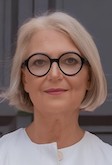
Luisa Torsi is internationally renowned as a pioneer in bio-organic electronic sensors and elected member of the Accademia dei Lincei. She earned a degree in Physics and a PhD in Chemistry from the Uni-versity of Bari, where she has served as Full Professor of Analytical Chemistry since the age of 40. Following a postdoctoral fellowship at Bell Labs in the U.S., she developed an interdisciplinary research approach that integrates electronic devices, analytical chemistry, and organic semiconductors. She also held a position as adjunct professor at Åbo Akademi University in Finland and currently occupies leadership roles, including Vice President of the Scientific Council of the National Research Council (CNR) and President of ARTI Puglia, the regional agency for innovation and technology transfer.
Torsi has received numerous international accolades: she was the first woman to receive the Heinrich Emanuel Merck Award for Analytical Sciences and she was also awarded the Exner Medal. She was awarded the prestigious President of the Republic Prize by the Accademia dei Lincei in 2023. In 2025, she has also been awarded an honorary doctorate from Åbo Akademi University. She is also a Fellow of both the Materials Research Society and the Royal Society of Chemistry and was also the first woman elected President of the European Materials Rese-arch Society.
With over 280 scientific publications, approximately 19,000 citations, and 14 patents (10 granted), Torsi ranks among the top 0.58% most-cited chemists in the world, according to ScholarGPS®. She has given more than 200 invited talks, including over 60 plenary lectures.
She has led numerous national and EU-funded research projects, including SiMoT, a platform for ultra-sensitive biomarker detection applied to early cancer diagnosis and viral screening such as COVID-19. She currently coordinates a project focused on detecting Xylella in olive trees in Apulia. Her dedication also extends to science communication and the promotion of women in STEM—through TEDx talks, the 100Esperte initiative, and even a feature in the Italian Topolino magazine, where she appeared as “Louise Torduck,” a successful scientist from Calisota Valle;
Website: https://www.uniba.it/docenti/torsi-luisa
ORCID: https://orcid.org/0000-0002-0798-0780
Researcher ID & Scopus ID: G-9065-2011; 7005294241
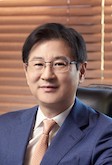
Professor Keon Jae Lee is an Endowed Chair Professor in the Department of Materials Science and Engineering at the Korea Advanced Institute of Science and Technology (KAIST) and a globally recognized expert in flexible and biointegrated electronics. He received his B.S. in Materials Science and Engineering from Yonsei University in 2001 and earned his Ph.D. from the University of Illinois at Urbana–Champaign in 2006. Since joining KAIST in 2009, he has led pioneering research on flexible and stretchable electronic systems, wearable and implantable biomedical devices, electronic skin (e-skin), flexible batteries, and advanced semiconductor materials. His work integrates materials science, nanotechnology, and biomedical engineering to develop next-generation healthcare, energy, and human–machine interface technologies. Professor Lee has established an outstanding research record, with approximately 150 SCI-indexed publications in leading journals including Nature Reviews Cardiology, Nature, Science, Nature Materials, Nature Communications, Science Advances, Advanced Materials, Nano Letters, ACS Nano, Energy & Environmental Science, and Nano Energy. In addition, he has secured approximately 150 patents in flexible and nanoelectronics technologies, with more than 70 patents licensed for commercialization, demonstrating the strong industrial impact of his research. Beyond his academic contributions, Professor Lee serves in several leadership roles at KAIST, including Vice President of the Institute for Technology Value Creation and Director of the Global Biointegrated Materials Center. Through his high-impact publications, technological innovations, and successful technology transfer activities, he has become one of the leading researchers worldwide in flexible electronics, biointegrated devices, and advanced materials engineering.

Elisa Michelini is associate professor in analytical chemistry at the Department of Chemistry “Giacomo Ciamician” of the University of Bologna (Italy). Her research activity is focused on developing optical biosensors for diagnostics, water, environmental, and agro-food sectors. In the last ten years her activity has been also focused on smartphone biosensors, paper sensors and biosensors relying on 3D cell models. She is author of more than 100 articles on high impact journals (h-index 40) and her work has been cited more than 5000 times (Scopus). She’s been placed in the top 0.5% of all scholars worldwide according to the most recent 2024 ScholarGPS rankings. She has been recipient of several awards including the Nanotech Applications Award (2009), Marlene DeLuca Prize (2012), Genelux Award (2014) and EPA Water Toxicity Sensor Challenge (winner Phase I 2022; honorable mention Phase II 2024). She coordinated a NATO-SPS project and has been deeply involved in EU projects (Horizon Europe and PRIMA-Partnership for Research and Innovation in the Mediterranean Area. She is associate Editor for Frontiers in Bioengineering and Member of the Advisory board of the Sensors & Diagnostic Journal (Royal Society of Chemistry).
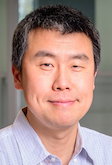
Dr. Xing Wang is a Bioengineering professor, affiliated with the Chemistry Department, Carl R. Woese Institute for Genomic Biology (IGB), Holonyak Micro and Nanotechnology Laboratory (HMNTL), and Cancer Center at Illinois (CCIL) at the University of Illinois Urbana-Champaign (UIUC). He received a Ph.D. from New York University, working with Dr. Ned Seeman to build biofunctional DNA motifs. He did his postdoc training at Princeton University with a focus on nucleic acid engineering and RNA biology. At UIUC, Dr. Wang directs the Nucleic Acids Programming Lab (NAPL), and his research group utilizes nucleic acid and protein engineering to evolve new molecular ligands for targeted drug delivery and create designer DNA nanostructure-based “plug-and-play” platforms for the applications in disease diagnosis and treatment. Dr. Wang is a recipient of Mikashi Award in 2021. He was selected as a Fellow of Y Combinator Founder Cohort in 2021. He received a Spoke Award in 2024. Dr. Wang’s research group is mainly supported by the National Institutes of Health (NIH) and National Science Foundation (NSF).

Dr. A.P. Zhukov is an Ikerbasque Research Professor at the Advanced Polymers and Materials group, University of the Basque Country, Spain. He graduated in 1980 from the Physics-Chemistry Department of the Moscow Steel and Alloys Institute (now the National University of Science and Technology), earned his Ph.D. in 1988 from the Institute of Solid State Physics (Chernogolovka) of the Russian Academy of Sciences, and completed his Doctor of Science (habilitation) at Moscow State “Lomonosov” University in 2010.
Dr. Zhukov has authored over 600 peer-reviewed publications, with a citation count exceeding 9,000 and an H-index of 51 (as of October 12, 2020). He has edited several conference proceedings and organized numerous international scientific events, including the Donostia International Conference on Nanoscaled Magnetism (DICNMA), ISMANAM 2017, and others. He has also chaired sessions at major conferences such as MMM and Intermag, and has been invited to deliver plenary and keynote lectures worldwide.
He serves as an Associate Editor for IEEE Magnetics Letters and the International Journal on Smart Sensing and Intelligent Systems, and is a member of several editorial boards and international scientific committees.
Dr. Zhukov has edited two books: Novel Functional Magnetic Materials and High Performance Soft Magnetic Materials; authored two monographs on magnetic microwires and sensors; and contributed chapters to key scientific handbooks, including the Handbook of Magnetic Materials edited by Prof. K. Buschow.

Prof. Dr.-Ing. Paul Motzki is the Scientific Director and CEO of the state-funded Saarland Engineering Institute – SEI (former ZeMA - Center for Mechatronics and Automation Technology) in Saarbruecken, Germany, which employs about 120 researchers in the fields of robotics, production technologies and smart materials. Within SEI, his own research activities run within CiMS – Center for intelligent Material Systems. He received his B.Sc., M.Sc. and PhD degrees in Mechatronics and Systems Engineering from Saarland University, Germany. In 2022, he was appointed the professorship “Smart Material Systems for innovative Production” by the Department of Systems Engineering of Saarland University; additionally, he joined the Department of Material Science and Engineering in 2025. Since 2023, Paul Motzki is the Chair of the VDI/VDE Technical Committee GMA 2.16: “Smart Materials and Systems”, Board Member of europe’s largest smart materials network smart3, Director on the board of the ASM International Organization on Shape Memory and Superelastic Technologies (SMST), Senate Member of the ASME SMASIS division, Vice President of the EuroEAP Society, and Vice President and Co-Founder of the International Elastocalorics Society – IES. His research interests cover the design and development of multifunctional actuator-sensor-systems or artificial muscles based on smart materials like shape memory alloys and electroactive polymers. Special focus is on the emerging field of elastocalorics.
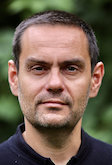
Olivier Soppera is Research Director at the French National Centre for Scientific Research (CNRS) and leads the PHOTON research group at the Institut de Science des Matériaux de Mulhouse (IS2M, France). He graduated in Chemistry at ENS Cachan and obtained his PhD from the University of Haute-Alsace in 2003, working on photopolymerization processes in hybrid. materials. After a postdoctoral fellowship in Portugal, he joined CNRS in 2004, where he progressively developed a research program at the interface of photochemistry, nanofabrication, and materials science.
Over the past two decades, his work has focused on the use of light as a versatile tool for materials design and structuring, with a strong emphasis on sol–gel chemistry, hybrid materials, and laser-assisted processing. He has pioneered photoinduced strategies for the fabrication of nanostructured films, functional coatings, and responsive surfaces with tunable optical and chemical properties.
His current projects span several research directions, including laser-assisted nanofabrication, development of hybrid organic–inorganic materials, and the integration of metallic nanoparticles to exploit plasmonic effects . These approaches open new perspectives for advanced optical sensors, environmental monitoring devices, and biomedical applications.
Olivier Soppera has coordinated and participated in numerous national and European research projects and has established long-term collaborations with both academic institutions and industrial partners. He is the author of more than 180 peer-reviewed publications and several patents. In addition to his scientific activities, he has been actively involved in fostering international collaborations, in particular with Taiwan and contributing to the scientific networks in France on Photochemistry (SP2P at SCF) and Nanosciences (C’Nano).

Professor Rosaria Rinaldi is currently Full Professor of Condensed Matter Physics at the Department of Mathematics and Physics “E. De Giorgi” of University of Salento, and she is a member of the Academic University Senate. Since 2019 she is Member of the Ministry of University and Research (MUR) Evaluation Committee for Flag Projects and Interest Projects to be implemented by public research institutions. Prof. Rinaldi is currently in charge of the research center in "Nanomedicine, Nanobioelectronics and Nanobiotechnology", at University of Salento. In 2005 R.R. was awarded the medal of "Le Scienze" and the medal of the President of the Republic (Carlo Azeglio Ciampi) for research carried out in the field of Nanobiotechnology. Since 2010, she was head of the Natural Sciences Area of and vice-director of University excellence school ISUFI till 2020. In 2015 she was visiting professor, winning an international selection for the "Eleonore Trefftz" chair, at the Technical University of Dresden in Germany. She was the coordinator of the doctoral school in Interdisciplinary Sciences and Technologies and Nanoscience at S.S. ISUFI and the coordinator of the doctoral school in Physics and Nanoscience, till 2020. She won the "ITWIIN-High Education" award (2016) and was one of the finalists for the 2017 EuWIIN “European Women Inventors and Innovators Network” contest prize. R.R. has coordinated or been a partner in more than 30 scientific projects at regional, national and EU level, in the last 15 years. R.R. is author and co-author of about 310 papers published in international scientific journals,13 monographs and book chapters, and 12 patents (H-index:40).
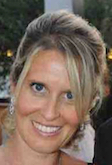
Riccarda Antiochia received a MSc degree in Chemistry with honours in 1992 and a MSc degree in Pharmacy with honours in 2009, both at the Sapienza University of Rome. In 1994 she received the Diploma of Imperial College from Imperial College, London, and in 1996 a PhD in Chemical Sciences from Sapienza University of Rome, where she is actually Full Professor of Advanced Medical Technology and Methodology.
She is component of the Scientific Council of the National Research Council (CNR) and of the Italian Committee for Biosafety, Biotechnology and Sciences of Life of the Presidency of the Council of Ministers.
She is Member of the Steering Committee of the Research Center for Biotechnology applied to Engineering of Sapienza University of Rome (CNIS), and of the Technical Committee of the Ministry of Environment and Energetic Security (MASE) for the environmental impact assessment of projects from Integrates National Energy and Climate Plan (PNIEC) and National Recovery and Resilience Plan (PNRR).
She is author of more than 110 papers in international peer-reviewed scientific journals, 3 book chapters and 1 monograph.
Her scientific activity is focused on the fields of biotechnology, nanotechnology and analytical chemistry. Her main area of research is the design and development of electrochemical (bio)sensors for clinical applications. More recently, she has been involved in the characterization of new nanostructured materials for electrode modification for electro- chemical (bio)sensors, biofuel cells and microneedles-based biosensor development.