
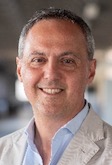
Giuseppe Carbone received the MSc degree in Mechanical Engineering (with honors) in 1998 and the PhD in Advanced Production Systems in 2002 from Politecnico di Bari (Italy). He is currently Full Professor. of Applied Mechanics and Tribology. From 2018 to 2024, he served as Head of the Department of Mechanics, Mathematics and Management at Politecnico di Bari. Since 2021, he is President of the Italian Tribology Association.
In 2010, he founded the Smart Tribology Lab at Politecnico di Bari, internationally recognized for research on tribology, contact mechanics, viscoelastic materials, adhesion, biomimetic micro-structured surfaces, and intelligent functional materials. He is currently leading the establishment of the China–Italy International Joint Laboratory on Smart Tribology, a strategic research initiative jointly developed by Nanjing University of Science and Technology and Politecnico di Bari, aimed at advancing fundamental and applied research on friction, adhesion, and advanced functional surfaces.
He has held visiting and academic positions at Imperial College London, Forschungszentrum Jülich, Eindhoven University of Technology, and the University of North Texas, and is Research Associate at the Institute of Photonics and Nanotechnologies of the Italian National Research Council. His research has been funded by national, European, and industrial programs for several million euros. He has authored over 300 publications, including about 170 journal papers indexed in Scopus, with more than 7.000 citations and an H-index of 45. He serves as Associate Editor of Tribology International and Chaos, Solitons & Fractals.
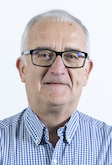
Jordi Fraxedas (Tarragona,1962), PhD in Physics (1990) from the University of Stuttgart (Germany), is a CSIC Scientific Researcher at the Catalan Institute of Nanoscience and Nanotechnology (ICN2) in Barcelona (Catalonia). His thesis work was performed at the Max Planck Institut für Festkörperforschung (Stuttgart) and at BESSY (Berlin, Germany), under the supervision of Prof. M. Cardona, and worked at ESRF (Grenoble, France), CERN (Geneva, Switzerland), Materials Science Institute of Barcelona (ICMAB) and at CNRS (Angers, France). His research activity is focused on interfacial phenomena and surface science using synchrotron radiation-based spectroscopies and scanning probe microscopies. He has co-authored 160 peer-reviewed scientific articles (>4000 citations, H=32) and published the books Molecular Organic Materials: From Molecules to Crystalline Solids (Cambridge University Press, 2006), Water at Interfaces: A Molecular Approach (Taylor&Francis/CRC, 2014) and Molecular Materials: Preparation, Characterization and Applications (Taylor&Francis/CRC 2017). ORCID: 0000-0002-2821-4831
Keynote talk title: Lowering the activation temperature of Ti-Zr-V non-evaporable getter films by removing surface carbon contamination

Prof. Dr. D. Depla has received his Master Degree in Chemistry in 1991 at Ghent University (Belgium). In 1996 he promoted with a PhD thesis in Solid State Chemistry on spray drying of precursors for superconductors. After a short period as senior scientist in the Department of Solid State Sciences, he became in 1999 Professor at the same department. His research focuses on the fundamental aspects of reactive magnetron sputter deposition. He has shown the importance of ion implantation on this process, and explained the discharge voltage behavior during reactive sputter deposition. In this way, his continuous research in this area resulted in several publications. He is now head of the research group “Dedicated research on advanced films and targets(DRAFT)” in the same department. More details can be found on www.draft.ugent.be. He is now the president of the Belgian Vaccum Society.

M. Clelia Righi is Full Professor at the Department of Physics and Astronomy of Bologna University. Her research activity focuses on the development and application of computational methods to understand and predict the behaviour of materials from first principles, particularly of surface and interface phenomena.
She adopted pioneering computational approaches in tribology and applied them for understanding chemical reactions activated by mechanical stresses and designing materials to reduce friction. She received an ERC consolidator grant for the project “Advancing solid interfaces and lubricants by first principles material design” (SLIDE) in 2019 and an ERC Proof of Concept grant for the project “Tribosynthesis of carbon coatings for friction and wear reduction” in 2025.
M. Clelia Righi is visiting professor at the Imperial College London, UK and collaborates with multinational companies in the energy and automotive sectors.

Holger Kersten is a Professor at the Institute of Experimental and Applied Physics at University of Kiel, Germany since 2006. Prior Professor Kersten was the head of the plasma processes group at the Leibniz Institute for Plasma Science and Technology (INP Greifswald) in Greifswald, Germany. The focus of his research includes basic studies on the interaction of plasmas with surfaces, complex plasmas and their applications in plasma technology. In 1999, he received the Greifswald Plasma Physics Prize in recognition of his research. Professor Kersten was furthermore the president of the German Society for Plasma Technology from 2009 to 2013. He is currently an Editor-in-Chief of the European Physical Journal Techniques and Instrumentation (EPJTI) and Vice Dean of the Faculty of Mathematics and Natural Sciences at Kiel University.
Talk Title: Plasma cleaning and treatment of art objects

Dirk Hegemann heads the Plasma & Coating group at Empa, the Swiss federal research institute for materials science and technology. He studied physics and received his PhD in materials science from TU Darmstadt, Germany, in 1999. After a research stay at the Fraunhofer Institute for Interfacial Engineering and Biotechnology in Stuttgart, Germany, he moved to Empa in St.Gallen, Switzerland, in 2003. Dirk Hegemann specialized in physical and chemical plasma deposition and etching processes as well as plasma-chemical gas phase processes. He published more than 140 peer-reviewed papers (H-index: 50) and is ranked among the Top Scientists in the field of Materials Science in Switzerland. His team focuses on the plasma functionalization of flexible polymeric materials and their implementation in industry as well as environmental aspects of plasma technology. Dirk Hegemann is a member of the board of the Swissvacuum Society and the International Plasma Chemistry Society (IPCS), and he serves as Editor-in-Chief for the journal Plasma Processes and Polymers,
Keynote Talk title: Environmental Aspects of Plasma-chemical Processes

Professor Marcela Bilek holds a PhD from the University of Cambridge, UK, a BSc from the University of Sydney and an MBA from the Rochester Institute of Technology, USA. Prior to her present appointment as Professor of Applied Physics at the University of Sydney (since 2000), she worked as a visiting Scientist at the Lawrence Berkeley National Laboratory in Berkeley, USA, held a visiting Professorship at the Technische Universitat Hamburg-Harburg in Germany and a Research Fellowship at Emmanuel College, University of Cambridge, UK.
Professor Bilek heads the Applied and Plasma Physics Research Group. Research projects in these areas are a stimulating mix of fundamental physics and practical applications, in areas which include materials physics, plasma deposition and processing, thin film materials, vacuum glazing, renewable and sustainable energy and cross-disciplinary research in the areas of biointerfaces and medicine.
Marcela has received a number of honours for her work including the Malcolm McIntosh Prize for Physical Scientist of the Year in 2002, an ARC Federation Fellowship and an MIT TR100 Young Innovator award in 2003, the Australian Academy of Science Pawsey Medal in 2004 an Australian Innovation Challenge Award in 2011 and an ARC Future Fellowship in 2012. In 2013 she was elected to the Fellowship of the American Physical Society (APS) "for outstanding contributions to the physics of plasma processing, resulting in plasma sources, processes and materials with applications to industries ranging from information technology to biomedicine". In 2015 she was elected to the Fellowship of the Institute of Electronic and Electrical Engineers (IEEE) "for contributions to the science and application of plasma processes for materials modification and synthesis".