

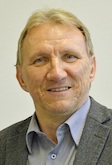
Jochen Schein received his Dr.-Ing. (Ph.D.) and Dipl.-Ing. (M.Sc.) degree in EE from Ruhr Universität Bochum in 1996 and 1992, respectively. His Ph.D. thesis dealt with electrode phenomena in gas discharge lamps. From 1997-1998 he worked as a post-doctoral researcher at the ME department of the University of Minnesota in the field of thermal plasmas for industrial application. From 1998 to 2004 he stayed with Alameda Applied Sciences Corp. in San Leandro, CA, where he was mainly involved in diagnostics for high energy plasma applications and plasmas for space propulsion. In 2004 he joined Lawrence Livermore Labs, working on energetics and soft x-ray diagnostics for ICF. In 2006 he joined Bundeswehr University Munich as a full professor in the EE department. His research interests focus on the development, characterization and qualification of electric propulsion systems as well as thermal and cold plasma applications. He has published more than 100 peer reviewed publications and received awards for his research in Germany as well as in the US.
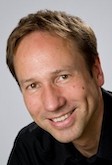
Holger Kersten is a Professor at the Institute of Experimental and Applied Physics at University of Kiel, Germany since 2006. Prior Professor Kersten was the head of the plasma processes group at the Leibniz Institute for Plasma Science and Technology (INP Greifswald) in Greifswald, Germany. The focus of his research includes basic studies on the interaction of plasmas with surfaces, complex plasmas and their applications in plasma technology. In 1999, he received the Greifswald Plasma Physics Prize in recognition of his research. Professor Kersten was furthermore the president of the German Society for Plasma Technology from 2009 to 2013. He is currently an Editor-in-Chief of the European Physical Journal Techniques and Instrumentation (EPJTI) and Vice Dean of the Faculty of Mathematics and Natural Sciences at Kiel University.
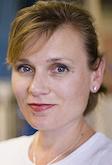
Dirk Hegemann heads the Plasma & Coating group at Empa, the Swiss federal research institute for materials science and technology. He studied physics and received his PhD in materials science from TU Darmstadt, Germany, in 1999. After a research stay at the Fraunhofer Institute for Interfacial Engineering and Biotechnology in Stuttgart, Germany, he moved to Empa in St.Gallen, Switzerland, in 2003. Dirk Hegemann specialized in physical and chemical plasma deposition and etching processes as well as plasma-chemical gas phase processes. He published more than 140 peer-reviewed papers (H-index: 50) and is ranked among the Top Scientists in the field of Materials Science in Switzerland. His team focuses on the plasma functionalization of flexible polymeric materials and their implementation in industry as well as environmental aspects of plasma technology. Dirk Hegemann is a member of the board of the Swissvacuum Society and the International Plasma Chemistry Society (IPCS), and he serves as Editor-in-Chief for the journal Plasma Processes and Polymers,
Professor Marcela Bilek holds a PhD from the University of Cambridge, UK, a BSc from the University of Sydney and an MBA from the Rochester Institute of Technology, USA. Prior to her present appointment as Professor of Applied Physics at the University of Sydney (since 2000), she worked as a visiting Scientist at the Lawrence Berkeley National Laboratory in Berkeley, USA, held a visiting Professorship at the Technische Universitat Hamburg-Harburg in Germany and a Research Fellowship at Emmanuel College, University of Cambridge, UK.
Professor Bilek heads the Applied and Plasma Physics Research Group. Research projects in these areas are a stimulating mix of fundamental physics and practical applications, in areas which include materials physics, plasma deposition and processing, thin film materials, vacuum glazing, renewable and sustainable energy and cross-disciplinary research in the areas of biointerfaces and medicine.
Marcela has received a number of honours for her work including the Malcolm McIntosh Prize for Physical Scientist of the Year in 2002, an ARC Federation Fellowship and an MIT TR100 Young Innovator award in 2003, the Australian Academy of Science Pawsey Medal in 2004 an Australian Innovation Challenge Award in 2011 and an ARC Future Fellowship in 2012. In 2013 she was elected to the Fellowship of the American Physical Society (APS) "for outstanding contributions to the physics of plasma processing, resulting in plasma sources, processes and materials with applications to industries ranging from information technology to biomedicine". In 2015 she was elected to the Fellowship of the Institute of Electronic and Electrical Engineers (IEEE) "for contributions to the science and application of plasma processes for materials modification and synthesis".

Prof. Petr Vašina (born 23 February 1979 in Brno) is a Czech physicist and professor at the Faculty of Science, Masaryk University, where he also serves as the Director of the Institute of Physical Electronics. He earned his Master’s degree and Ph.D. at Masaryk University, as well as a Ph.D. from Université Paris-Sud in France. His research focuses on plasma physics, particularly on the study of elementary processes in pulsed-power excited discharges, diagnostics and modeling of reactive plasmas, and the development of advanced thin film and nanostructured coating technologies using hybrid deposition methods such as PVD-PECVD.
Prof. Vašina has authored numerous peer-reviewed publications in leading journals in plasma and surface science and has been the principal investigator or coordinator of several national and international research projects, including major EU- and Czech-funded initiatives such as the Central European Platform for Plasma-enabled Surface Engineering (COLOSSE, Horizon Europe), the Sensorics for the 21st Century project (NCK MATCA), and the R&D Centre for Plasma and Nanotechnology Surface Modifications (LM2023039). At Masaryk University, he also plays a key role in research at the CEPLANT centre, teaches courses on thin film deposition and plasma diagnostics, and has supervised many students in the fields of plasma physics, materials science, and nanotechnology.